Picture your sales manager on a Tuesday afternoon, preparing a proposal for the largest contract of the year. The proposal includes pricing, payment terms, options, and maybe a few details about where your product line is heading. To move faster, they paste it into ChatGPT and ask for a sharper version.
Their goal is good: serve the client well and speed things up. But one question goes unanswered. As I put it in a recent live session:
The information that we need to share with AI is generally also the information that we need to protect most.
That is the dilemma at the centre of every AI rollout. We want AI to help with important decisions, and important decisions run on important data. It is two sides of the same coin.
What happens to your data after you press enter?
Before AI, businesses built careful security around their information: passwords, permissions, a clear picture of who could open which folder. AI quietly adds new paths that most of those controls never anticipated.
When someone pastes company information into a public AI tool, it can go to several places at once:
- Chat history. Conversations are stored so people can return to them. Deleted chats on consumer plans are removed within 30 days, unless a legal obligation requires keeping them.
- Model training. On consumer plans, content may be used to improve future models unless the user opts out.
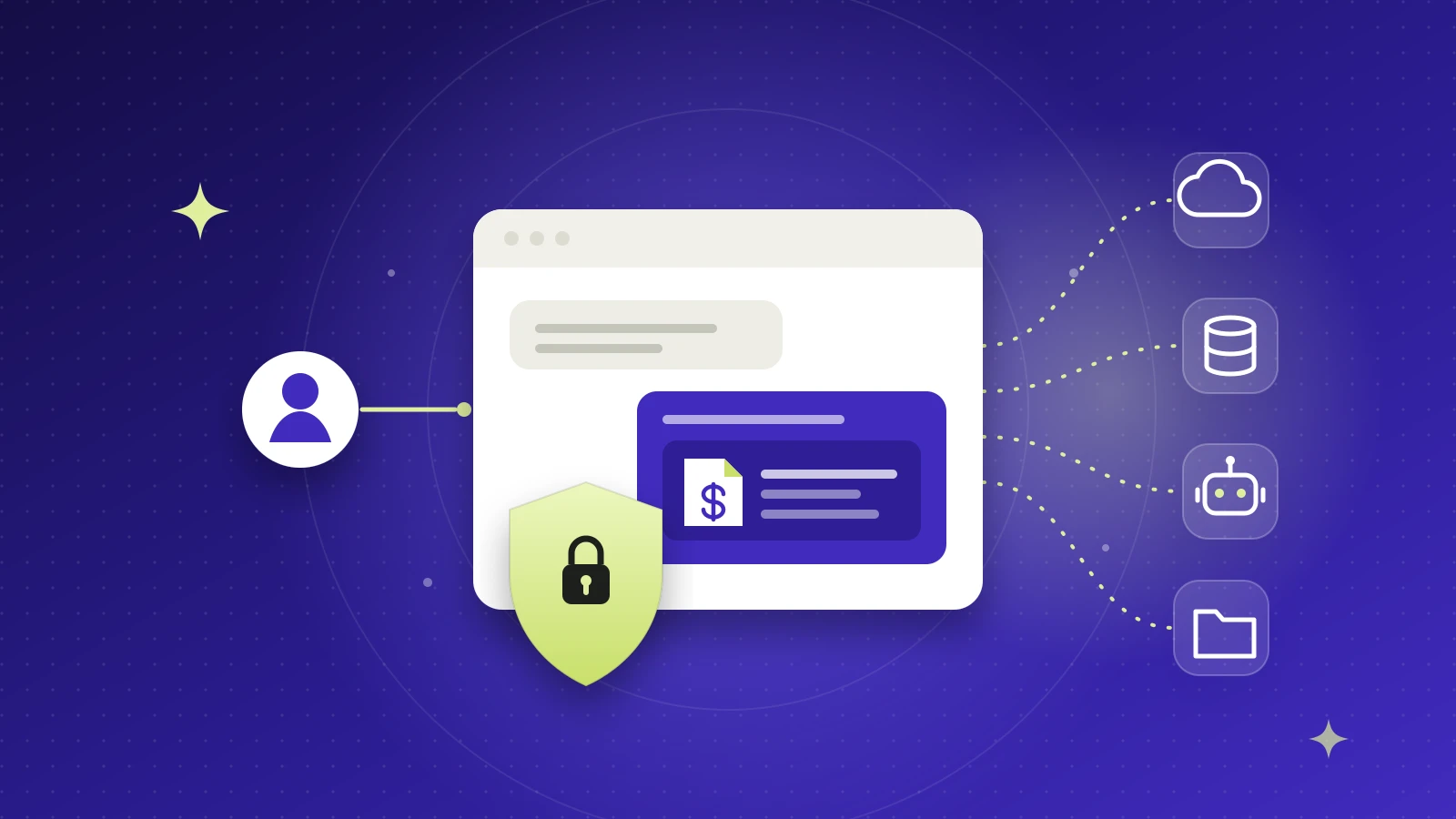
- Connected agents and apps. AI tools now update CRMs, edit documents in cloud drives and send email. Information you share with one assistant can be passed to other tools.
- Other people's screens. Shared links, shared workspaces and custom assistants all widen the circle of who can see a conversation.
The agent point matters more every month. As I said in the session, "as one agent interacts with another agent, the information flow can be multi-level deep." It is no longer enough to know which document was uploaded. You also need to know which agent touched it next, and where that agent sent it.
Is ChatGPT for business private? A plan-by-plan comparison
"ChatGPT" is not one product. The privacy answer changes a lot depending on which plan your team is actually using. Here is how OpenAI's own documentation describes each plan as of November 2026.
| Free, Go, Plus, Pro | ChatGPT Business | ChatGPT Enterprise | OpenAI API | |
|---|---|---|---|---|
| Used to train models by default | Yes, opt-out available | No | No | No |
| Data processing agreement (DPA) | No | Yes | Yes | Yes |
| Admin controls | None | SSO, MFA, roles | SSO, SCIM, custom roles, analytics | Project and key controls |
| Retention | Deleted chats removed within 30 days | Each user controls history | Admin-set retention | 30-day logs, zero-retention option |
| Data residency choice | No | New workspaces, at sign-up | US, Europe, Canada and more | US, Europe, Canada and more |
| Price (USD) | Free to $200 per month | From $20 per user per month (annual) | Custom | Pay per use |
Two details are easy to miss:
- The setting is per person. A consumer user can switch off training, but your company cannot enforce that across accounts it does not own.
- Residency is not the whole story. On ChatGPT Business, OpenAI notes that if you choose a region outside the US, a copy of every prompt and response is also stored in the United States for a limited time for abuse monitoring. For an EU or Canadian company that is a detail worth putting in front of your privacy lead.
“Not used for training” is not the same as private
The business plans are a real step up. But not training on your data is only one part of privacy. It does not answer where the data sits, who can reach it, or what a court can order. Three examples show the gap.
Courts can override retention promises. In May 2025, a US federal judge in the New York Times v. OpenAI copyright case ordered OpenAI to preserve output logs it would otherwise have deleted, including chats users had deleted, across Free, Plus, Pro and Team accounts. Enterprise, Edu and zero-retention API customers were excluded. OpenAI says that obligation ended on 26 September 2025. A later order required OpenAI to hand over 20 million de-identified consumer chat logs. Whatever you think of the case, the lesson for a business is simple: data stored with a provider is subject to that provider’s legal battles.
Staff use personal accounts. Your company may pay for ChatGPT Business, but that does not stop someone opening a personal account in another tab. Cyberhaven’s 2026 research found that 32.3% of workplace ChatGPT use goes through personal accounts. LayerX puts personal-account use across all AI tools at 47%.
Agents multiply the paths. A business plan protects the chat. Once an agent connects that chat to your drive, inbox and CRM, every connection is another door to manage.
The Coca-Cola secret that was never the formula
In 2006, Joya Williams was an executive administrative assistant at Coca-Cola. Through her role she had access to confidential material. It was not the famous formula, which is guarded like few secrets on earth. It was something that looked far less dramatic: documents and a sample of a product Coca-Cola had not launched yet.
Working with two accomplices, she offered that material to PepsiCo “to the highest bidder”. PepsiCo did not take it. It sent the letter to Coca-Cola, which called the FBI. An undercover agent paid $30,000 for documents and a sample, and agreed to buy the rest for $1.5 million. All three were arrested on the day that deal was meant to close. Williams was sentenced to eight years in prison, one accomplice to five, and the third to two.
The lesson I took from it:
Information doesn’t need to be really obvious in terms of value. It doesn’t need to be a tangible, obvious trade secret. It could be something very subtle, but it can be beneficial to somebody else.
Your plans for tomorrow, your pricing, your pipeline and the names of your best customers are exactly that kind of information. Back then, someone had to carry paper files or a floppy disk out of the building. Today, as I said in the session, “you just need a click of a button and upload it to an AI and off it goes.”
Your team is probably already doing this
If you have not set an AI policy, your team has not stopped using AI. It is just using it without one.
- of AI users bring their own AI tools to work (Microsoft & LinkedIn, 2024)
- 78%
- of AI interactions involve sensitive data (Cyberhaven, 2026)
- 39.7%
- of enterprise AI conversations happen in personal accounts (LayerX, 2026)
- 47%
Banning AI does not fix this for long. In 2023, after staff reportedly pasted sensitive code and meeting notes into ChatGPT, Samsung restricted generative AI on company devices. By June 2026, the same division was rolling out ChatGPT, Gemini and Claude to employees. The ban bought time. The lasting answer was governed access.
And as I told the audience: “If you don’t use AI, you lose your competitive edge. But if you use AI in the way that everybody else is using it, you get the same answers everybody else is getting.”
What the rules say in the EU, the US and Canada
This is not legal advice, but these are the rules most of our clients in Europe and North America need to keep in mind.
European Union
- GDPR Article 28. If an AI provider processes personal data on your behalf, you need a written contract that limits what they can do with it. Business plans offer a data processing agreement. Consumer accounts do not.
- GDPR fines reach up to €20 million or 4% of worldwide annual turnover for the most serious breaches.
- EU AI Act Article 4 has applied since February 2025. Following the 2026 AI Omnibus, companies that use AI must take measures to support the AI literacy of their staff. Teaching people what not to paste is the obvious place to start.
United States
- There is no single federal privacy law, but sector rules such as HIPAA still apply, and so do state privacy laws.
- The FTC has warned that quietly changing your terms to start using customer data for AI training may be unfair or deceptive. That cuts both ways: watch what your vendors change, and be open with your own customers.
Canada
- PIPEDA governs how private-sector organizations handle personal information, including the duty to safeguard it.
- Canada’s federal, provincial and territorial privacy commissioners published principles for generative AI in December 2023. They advise organizations to de-identify data in prompts where possible, and to enter personal information only where that is authorised.
- Quebec’s Law 25 requires a privacy impact assessment before personal information is sent outside Quebec, which includes most public AI services. Administrative penalties reach $10 million or 2% of worldwide turnover.
The 15-minute stranger test
Here is a challenge I gave everyone in the session. You can do it today.
- Open your recent AI conversations, on every platform you or your team use.
- Find what you uploaded or pasted. Documents, spreadsheets, call transcripts, client emails.
- Ask one question about each item: “Would I be comfortable sharing this with a stranger?”
- If the answer is no, and you have already shared it with a public AI, there is your answer. Note the risk.
- Trace where it went. Who can retrieve it now? Which apps or agents are connected to that account?
That one question, the stranger question, is the fastest risk assessment I know. Use it to sort your information into three tiers:
| Tier | Example | Where it can go |
|---|---|---|
| Green. Fine for a stranger to see | Published marketing copy, public research, general how-to questions | Any approved AI tool |
| Amber. Internal, low harm if leaked | Vacation policy, meeting agendas, first drafts | Business or Enterprise plan with no training and a DPA |
| Red. Real damage if leaked | Customer lists, pricing, financials, contracts, health or HR records, unreleased plans | Private AI inside your own environment, with permissions and a human approving key actions |
How private AI changes the equation
The goal is not to stop using AI. It is to use it without giving up control. That is what a private, or sovereign, AI is for. In the way we build it:
- It connects to your systems instead of copying data out. Rather than people pasting into a chat box, the AI reads just enough from your accounting system, CRM, ERP or email to answer the question.
- It is model-independent. You can switch the underlying AI model whenever a better or cheaper one appears, without being locked to one vendor.
- Every workflow has a risk level. Permissions follow the green, amber and red tiers, and the system records where information goes.
- A human approves the important decisions. AI does the legwork. People sign off on anything that matters.
It does not mean buying your own data centre. It can run inside your company, in a cloud account you control, or as a hybrid where we host the environment and your data stays under your control.
We approach it in three steps. Expand: start from the result you want and map the information it needs. Equip: put permissions, identity and the right tools in place. Evolve: collapse ten human steps into two AI-assisted ones, with every step tracked and governed.
A one-page AI data policy you can adopt this week
- Business data goes into company AI accounts only. No personal accounts for work.
- Red-tier data never goes into a public AI tool.
- Turn off training on every account that offers the setting.
- Connect agents to company systems only after someone has approved what they can read and write.
- Name one owner for AI tools, and review them every quarter.
- Teach the stranger test to everyone, starting with the people who handle the most sensitive data.
If you want help mapping your own green, amber and red data, or designing a private AI that keeps the red data at home, tell us what you are working on. You can also see how we work.
Sources
- OpenAI, How your data is used to improve model performance and Business data privacy, security and compliance
- OpenAI, Where your ChatGPT Business content is stored and What is ChatGPT Business
- OpenAI, How we’re responding to The New York Times’ data demands, updated October 2025; ABA Journal, 20 million chat logs ruling, January 2026
- US Department of Justice, Coca-Cola trade secrets indictment, 2006; CBS News, sentencing report, May 2007
- Microsoft and LinkedIn, 2024 Work Trend Index; Cyberhaven, 2026 AI Adoption & Risk Report; LayerX, State of AI Usage Report 2026
- TechCrunch, Samsung restricts generative AI, May 2023; CIO, Samsung adopts three AI models, June 2026
- GDPR Article 28 and Article 83; European Commission, AI literacy Q&A
- FTC, Quietly changing your terms of service could be unfair or deceptive, February 2024
- Office of the Privacy Commissioner of Canada, Principles for generative AI, December 2023; Commission d’accès à l’information du Québec, Law 25 changes
Questions people ask
Is it safe to put company data into ChatGPT?
It depends on the plan and the data. On consumer plans (Free, Go, Plus, Pro) OpenAI may use your content to train its models unless you switch that off. ChatGPT Business, Enterprise and the API do not train on your data by default and come with a data processing agreement. Even then, the data is stored on OpenAI's servers, so keep anything you would not hand to a stranger, such as customer records, pricing or unreleased plans, out of consumer accounts, and use a business plan or a private AI for it.
Is ChatGPT for business private?
ChatGPT Business and Enterprise are more private than consumer ChatGPT: by default your inputs and outputs are not used for training, data is encrypted, admins get SSO and access controls, and OpenAI signs a data processing agreement. They are not private in the sense of staying inside your own environment. Your data still lives with OpenAI, under OpenAI's retention rules and any legal orders that apply to it.
Does ChatGPT Business or Enterprise train on my data?
No, not by default. OpenAI states that it does not use data from ChatGPT Business, Enterprise, Edu or the API, including inputs and outputs, to train or improve its models unless the customer opts in.
Can I stop ChatGPT from training on my conversations?
Yes. On consumer plans, turn off 'Improve the model for everyone' under Settings, Data controls, or use Temporary Chat, which is not used for training. This setting is per person, so it does not protect a company whose staff use personal accounts.
Is putting customer personal data into ChatGPT allowed under GDPR or PIPEDA?
Only with care. Under GDPR, an AI provider that processes personal data for you needs a written processing contract (Article 28), which consumer accounts do not provide. Canada's privacy commissioners advise entering personal information into generative AI only where it is authorised, and de-identifying it where possible. Quebec's Law 25 requires a privacy impact assessment before personal information leaves the province.
What is shadow AI?
Shadow AI is staff using AI tools the company has not approved, often through personal accounts. Microsoft and LinkedIn found that 78% of AI users bring their own AI tools to work, and Cyberhaven's 2026 research found 32.3% of workplace ChatGPT use happens through personal accounts that the company cannot see or control.