It is Sunday night. Your phone buzzes. “Hey, do you have a few minutes? I was just looking at this for the Monday meeting…”
And you feel it before you answer. The shoulders tighten a little. The jaw. The chest. Because you know this is now your problem, and your weekend is over.
If you lead people, at work or at home, you know this pattern. From the outside, people see a calm face and someone who handles everything without flinching. Behind the scenes there are late nights, forgotten things and the voice that says: nobody else can do this as well as I can. That voice made you responsible. It kept you safe. And now it is capping what you can do.
It’s not about losing control. It’s about multiplying capacity.
Ben’s problem: every decision came back to him
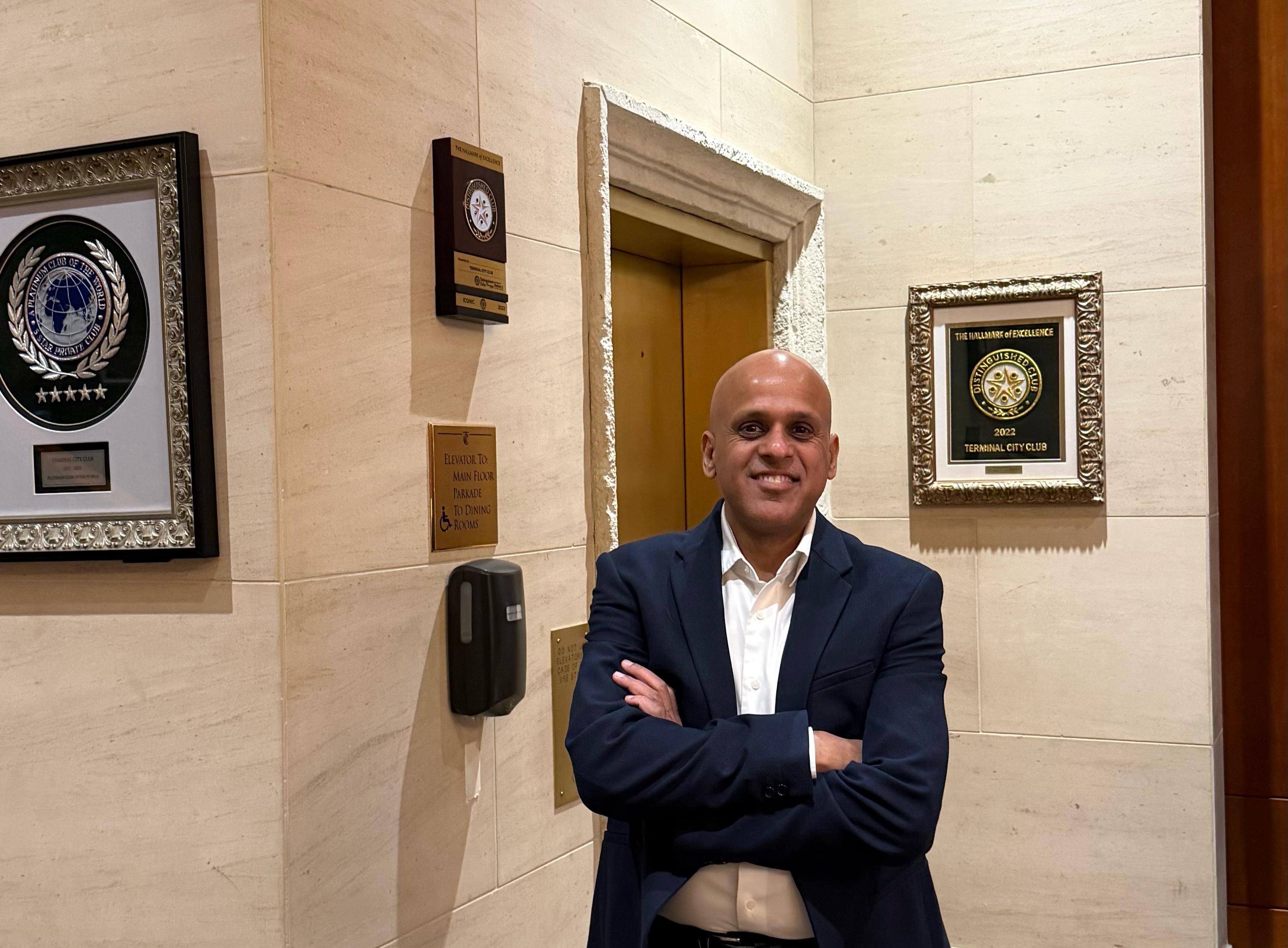
I recently spoke with a business leader. Let’s call him Ben. He opened with hard questions. What do you sell? What makes you unique? Then he went deeper into data security and privacy, again and again. It mattered to him because every decision ran through him. It was his name on it. If a wrong call was made, he was responsible.
At one point he said: “I still think you don’t know how we work.” And he was right. Nobody knows your business as well as you do.
Then he described the real problem. He had a team of highly qualified engineers. Two of them could look at the same data and draw very different conclusions. One says go this way, the other says go that way. One small mistake could be disastrous. So the decision always came back to Ben.
His team did not need more data. They needed to know one thing: what would Ben say?
Here is a test worth taking. If you took two weeks off, which decisions would get stuck waiting for you? Would things move as smoothly as when you are around?
What is an AI digital twin, and how is it different from a second brain?
The idea of a digital twin comes from engineering. Michael Grieves described it in 2002 as a virtual model that mirrors a physical product, and the name was coined at NASA around 2010. A second brain comes from Tiago Forte’s 2022 book Building a Second Brain: a trusted place outside your head for your most important ideas.
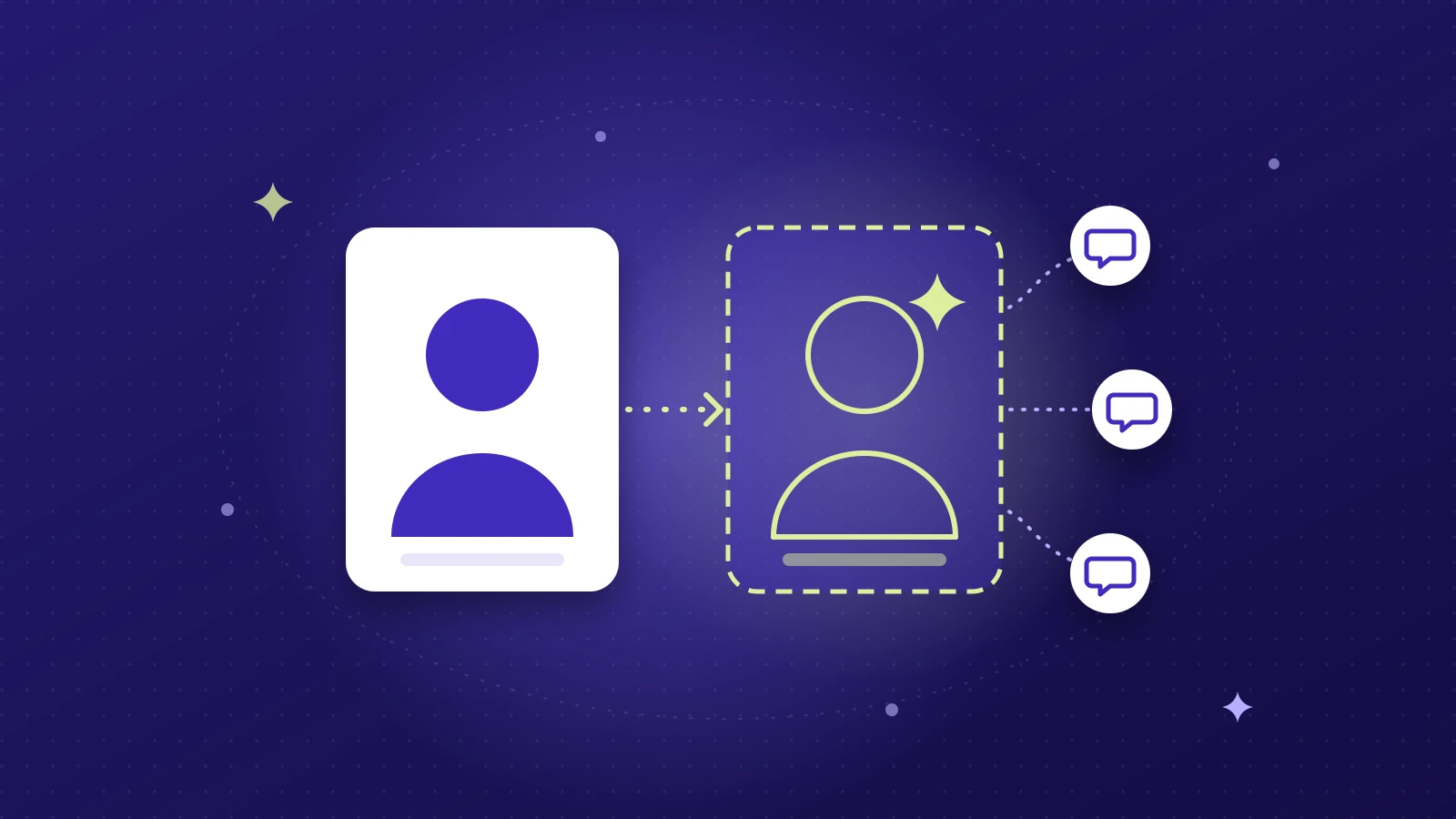
An AI digital twin of yourself combines the two. It is a private AI that holds not just your documents but how you think: your principles, standards, past decisions and the reasoning behind your intuition. People can ask it questions and get an answer close to the one you would give.
Big companies are starting to take this seriously. In September 2026, Gartner listed the “employee digital twin” among the technologies reshaping work. A Gartner analyst told IT Brew that an executive’s twin can help staff understand how the leader would approach a question when the leader has no time to meet.
| Approach | What it holds | What it does | Main limit |
|---|---|---|---|
| Notes and wikis | Documents and procedures | You search them | Nobody reads them; no judgment |
| Second brain app | Your notes, linked | Helps you find and connect ideas | Mostly useful to you, not your team |
| Generic AI chat | The public internet | Gives average answers | Doesn’t know your business or how you decide |
| AI project or agent on a business plan | Your files plus written instructions | Answers from your documents | Captures facts more than judgment; tied to one vendor |
| Private AI digital twin | Your principles, decisions, reasoning and documents | Answers like you, escalates exceptions, learns from your answers | Needs a few weeks of your time to capture well |
Why can’t I just use ChatGPT for this?
You can start there, and many people do. But there are three gaps.
It captures logic, not intuition. Most people use AI for step-by-step thinking and upload their procedures. That misses the part your team actually needs: your gut feel. Think of a chef with a cake recipe. Even if someone follows it exactly, only the chef knows the slight variation that really brings out the taste. That is the part worth capturing.
It speaks to everyone the same way. Every person on your team thinks differently. An instruction that lands with one person may not land with another. A twin built well can explain your thinking in a way that makes sense to each person, so your wisdom flows to them the way information flows on the internet.
Your judgment is your most valuable data. We have seen many reports of company data leaking from public AI tools. If you are going to write down how you price, how you assess risk and how you handle your best customers, it belongs in an environment you control. Our guide to what not to share with ChatGPT explains why.
There is also a platform question. As of November 2026, OpenAI is retiring custom GPTs (from 11 December 2026 on most business plans) and Google is replacing Gemini Gems with “skills” from March 2027. If your judgment lives inside one vendor’s feature, it moves when they move. That is the vendor lock-in problem in miniature.
What does it cost to start?
Here are the mainstream business options, in US dollars as of November 2026. All of them say they do not train on business customers’ data by default.
| Option | Price per user per month | How you’d build a twin |
|---|---|---|
| ChatGPT Business | $20 annual, $25 monthly | Shared Projects with files and instructions |
| Claude Team | $20 annual, $25 monthly | Projects with a knowledge base and instructions |
| Microsoft 365 Copilot | $30 annual (Copilot Business for smaller firms from $18 to $21) | Agents in Copilot Studio |
| Google Workspace with Gemini | Included from $14 (Business Standard) | Skills, replacing Gems |
| Private AI built for you | Project-based | Captured judgment, your permissions, any model |
The licence is the small part. The real investment is a few weeks of your time capturing how you decide, and the setup that keeps it secure. Our guide to what AI implementation really costs covers the rest.
The real constraint is people, and AI changes that
In life and business there are only three constraints: time, money and people. Before AI, all three were hard. You can’t make more time. Money is what it is. People are expensive and not always available.
But every constraint comes down to people. If you could hire the right person, you would get your time back. If you found a new customer who pays well, the money problem would be solved. And today, the biggest change that people are not talking about enough is that the people constraint can be solved with AI, or with AI plus people.
So the question changes. It is not how do I solve this. It is who, or what, can solve it for me. Keep the few decisions only you can make. Delegate everything else.
- the most-pinged Microsoft 365 users are interrupted during core hours (Microsoft Work Trend Index, 2025)
- Every 2 min
- of managers worldwide are engaged at work, down from 27% a year earlier (Gallup, 2026)
- 22%
- of leaders’ and teams’ time is wasted searching for answers (Atlassian State of Teams, 2025)
- 25%
There is a longer-term reason too. In October 2026, the Canadian Federation of Independent Business found that 63% of small business owners plan to exit within ten years, and only 6% have a formal succession plan. When an owner leaves, the knowledge in their head usually leaves with them. A twin turns that knowledge into something the business keeps.
Two real results
Ben stopped answering his phone on weekends. We sat down with him, understood how he decides and what he focuses on, captured it in a custom AI built to work with human intuition, and rolled it out to his team. When two engineers disagree now, they ask Ben’s twin first. When Ben settles a question himself, that answer feeds back into the twin, so it gets smarter. Decisions happen faster, and his growth is no longer limited by his capacity. He went from “I’ll just do it” to every team member knowing how Ben thinks.
Another leader stopped doubting every decision. They were in a senior role but had impostor syndrome. Before any decision, they called someone to check they were on the right track, because they trusted that person’s opinion more than their own. After about four weeks of using the same technology for self-reflection, they were making more decisions on their own, and then leading their team to make more decisions faster too.
We use it ourselves. My team doesn’t talk to me all the time. They ask my AI digital twin and get about 80% of their answers without me being in the room.
What the rules say in the EU, the US and Canada
This is not legal advice. These are the rules that matter when a twin answers questions for your team or your customers.
European Union
- EU AI Act Article 50 applies from 2 August 2026. If people interact directly with an AI system, they must be told it is AI, unless that is obvious. Label your twin clearly, especially for customers. Fines reach €15 million or 3% of worldwide turnover, with proportionality for SMEs.
- Article 4 (AI literacy) requires companies that use AI to take measures to build their staff’s AI literacy. No certificate is needed; keep records of training.
- GDPR still applies to any personal data in the twin, such as notes about employees or clients. Keep only what it needs, and do a data protection impact assessment if the processing is likely to be high risk. Proposed GDPR changes in the EU “digital omnibus” are still being negotiated and are not law.
United States
- California’s bot disclosure law (in force since 2019) makes it unlawful to use a bot online to mislead someone about its artificial identity to drive a sale or influence a vote. Utah requires businesses to disclose generative AI use when a consumer asks.
- The FTC’s Impersonation Rule targets impersonating governments and businesses. Whatever the law, never let a twin pretend to be the real you to a customer.
Canada
- PIPEDA applies to personal information the twin holds. The privacy commissioners’ generative AI principles (December 2023) say generative AI is not outside existing law.
- Quebec’s Law 25 requires telling a person when a decision about them is made exclusively by automated processing, and letting them ask a human to review it. A twin with a human approving key decisions fits this well.
- Bill C-36, tabled in June 2026 to replace part of PIPEDA, would add transparency duties for automated decisions. It is not law yet.
How to build an AI that thinks like you: Expand, Equip, Evolve
Expand: capture how you decide
- List the questions people bring you. Over one week, write down every “quick question”. These are your twin’s first job.
- Write down your last few calls. For ten recent decisions, note what you decided, what you weighed and what made the difference. That last part is the chef’s secret.
- State your principles. How do you price? When do you say no? What does good look like? What would you never compromise on?
- Name the exceptions. Which decisions must always come to you: money above a limit, legal risk, key customers, people decisions?
Equip: put it somewhere private and governed
- Use a private or business-grade AI that does not train on your data, with access by role.
- Label it as AI for anyone who uses it, and decide whether customers will see it at all.
- Give your team one place to ask, and tell them to ask the twin before they call you.
Evolve: let it learn from you
- Route exceptions to you, and feed your answers back so the twin improves.
- Review it monthly. Where did it answer differently from you? Fix the principle, not just the answer.
- Measure the calls. Count the weekend and after-hours questions before and after. That is your number.
A five-minute check for this week
- If you took two weeks off, what would wait for you? Write the list.
- Which three questions do you answer most often?
- Where does your team go today when they can’t reach you?
- Which of your decisions are pure intuition that nobody else can explain?
- Who in your life is a Ben? Maybe it’s you.
This technology is not about automation. It is about augmenting a human. You don’t need to be technical, just as you don’t need to understand an engine to drive a car. If you want to capture your judgment in a private AI your team can use, with you keeping the final say, tell us your goal or see how we work. If the bigger question is where to start with AI at all, read how to use AI in your small business.
Sources
- Simon & Schuster, Building a Second Brain by Tiago Forte, June 2022; NASA, Digital twin history, John Vickers, November 2024; Diginomica, Grieves and Vickers on the history of digital twins, September 2023
- Gartner, Gartner identifies four shifts shaping the future of work, September 2026; IT Brew, So you want to make a digital twin of your IT leader, May 2026
- OpenAI, ChatGPT Business overview and Creating and editing GPTs; Anthropic, Claude pricing and What are Projects; Microsoft, Microsoft 365 Copilot pricing and Copilot privacy; Google, Workspace pricing and Transition from Gems to skills, all read November 2026
- Microsoft, Breaking down the infinite workday, June 2025; Gallup, State of the Global Workplace 2026, April 2026; Atlassian, State of Teams 2025, March 2025
- Canadian Federation of Independent Business, Most small business owners plan to exit over the next decade, October 2026
- European Commission, Transparency obligations under Article 50, July 2026, and AI literacy Q&A, October 2026; GDPR
- California Legislative Information, Bots disclosure law, Business and Professions Code 17940–17943; Perkins Coie, New Utah AI laws change disclosure requirements, May 2025; FTC, Impersonation Rule
- Office of the Privacy Commissioner of Canada, Principles for generative AI, December 2023; LégisQuébec, Act respecting the protection of personal information in the private sector; Government of Canada, New legislation to protect privacy, June 2026
Questions people ask
What is an AI digital twin of yourself?
An AI digital twin of yourself is a private AI assistant that has learned how you think: your principles, past decisions, standards and the reasoning behind your gut calls. Your team asks it the questions they would normally bring to you, it answers the routine ones the way you would, and it passes exceptions to you. You keep the final say, and each answer you give makes it better.
What is an AI second brain for business owners?
The term comes from Tiago Forte's 2022 book Building a Second Brain, which describes a trusted place outside your head for your most important ideas. An AI second brain goes further: instead of just storing notes, it can search them, connect them and answer questions from them. For an owner, the most valuable thing to put in it is how you make decisions, not only documents.
Can I build an AI clone of myself with ChatGPT?
You can start with ChatGPT Business Projects, Claude Team Projects, Microsoft Copilot agents or Google Gemini, using your documents and written instructions. As of November 2026, business plans start around US$20 to $30 per user per month and do not train on your data by default. OpenAI is retiring custom GPTs in December 2026 and Google is replacing Gems with skills, so build on something you control and can move.
Is an AI digital twin safe for my business?
It can be, if it runs on a business or private AI with no training on your data, access controls by role, and a person approving decisions that matter. Keep personal data to the minimum it needs. In the EU, from 2 August 2026 the AI Act requires telling people when they are interacting with an AI system, so label the twin clearly, especially if customers can use it.
How long does it take to build an AI that thinks like me?
A useful first version can be ready in weeks, not months. Start by listing the questions people bring you most often and writing down how you decided the last few times. In our work, one leader who doubted every decision was making more calls on their own, and empowering their team to do the same, after about four weeks of working with this kind of system.
Will an AI digital twin replace me or my team?
No. It multiplies your capacity rather than replacing your judgment. The twin answers the routine questions the way you would, escalates anything unusual to you, and keeps learning from your answers. Gartner analysts describe executive twins as a way for staff to understand how a leader would approach a question, and say twins outperforming executives is extremely far away.