In almost every conversation I have with business owners lately, the same theme comes up. We want more customers. More leads. More qualified prospects.
Then we dig a little deeper. Most of these businesses have operated for years. They have built relationships, completed thousands of transactions and answered countless support requests. A lot of data has been collected. So I ask a simple question: while you’re out looking for more strangers, what about the people who already know you? How often are you in front of them?
In most cases the answer is: not often.
Information is not going to create value. It is going to create noise until it is organized, clean and converted into clean data.
The doctor who connected the dots: London, 1854
On 31 August 1854, cholera broke out around Broad Street in Soho, London. Within ten days, more than 500 people living within 250 yards of one street corner had died. By the end of September the toll was about 616. Most people, including most doctors, believed cholera spread through foul air.
Dr John Snow did not. He went through the death records and knocked on doors, asking where each victim got their water. A pattern appeared: most had drunk from the public pump on Broad Street.
The exceptions told the same story. A brewery on Broad Street employed more than seventy workmen. None of them died. The men had an allowance of malt liquor, and the brewery had its own deep well, so they never drank from the pump. Nearby, the Poland Street workhouse housed 535 people, and only five died. It had its own well too.
On the evening of 7 September, Snow presented his evidence to the local parish board. The next day, the pump handle was removed.
Here is the part the popular version leaves out. By 8 September, deaths were already falling: from a peak of 143 fatal attacks on 1 September to 12 a week later. A local curate, Henry Whitehead, at first set out to disprove Snow. He re-interviewed residents for months, ended up confirming the pump link, and traced the likely source: a baby’s nappies rinsed into a cesspool less than three feet from the well. He also argued that removing the handle probably prevented a second outbreak. Snow’s famous dot map came later, in December 1854, and the official inquiry did not accept the pump explanation until August 1855.
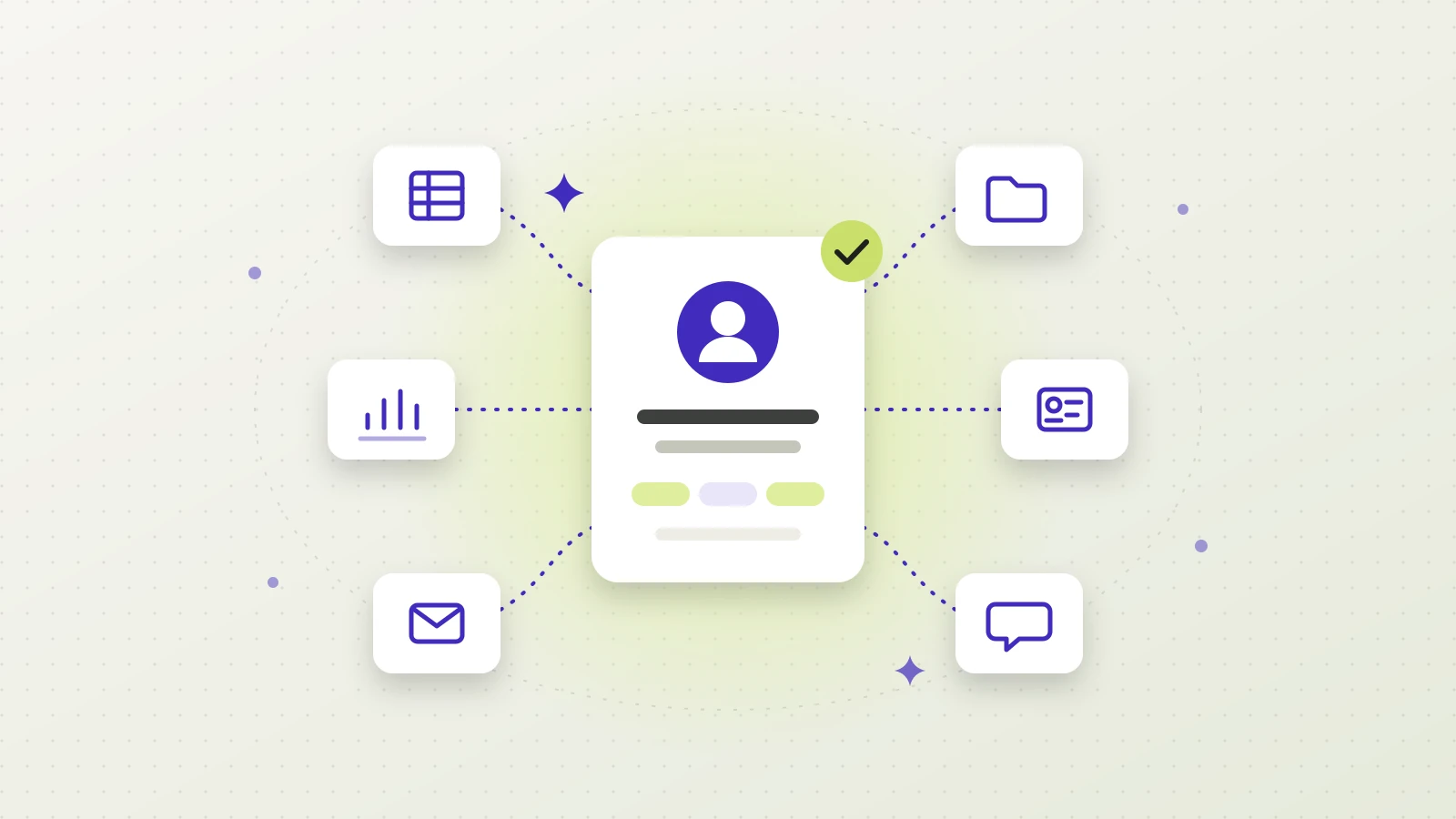
Scattered addresses, death records and neighbours’ memories became one coherent picture. That is why Snow is often called a father of modern epidemiology. Before AI, that kind of work took weeks of door-knocking and months of analysis. Now you can do much of it with your own business data, very quickly.
Your customer data lives in five places at once
In a typical business, every department knows something different about the same customer:
- Sales knows why they bought.
- Marketing knows what attracted them.
- Operations knows what they bought and how you served them.
- Support knows what went wrong and what they complained about.
- Leadership knows the whole story: how the relationship started and what it is worth.
That knowledge sits in the CRM, spreadsheets, Google Drive, email and some people’s heads. Each system was necessary to run the business. None of them gives you a whole view of one customer.
- of company data is siloed, inaccessible or unusable, data leaders estimate (Salesforce, 2025)
- 19%
- of the average enterprise’s 897 apps are connected to each other (Salesforce, 2025)
- 29%
- of AI projects without AI-ready data will be abandoned through 2026, Gartner predicted (Feb 2025)
- 60%
The same Salesforce survey found that data leaders consider 26% of their data untrustworthy, and 84% said their data strategy needs a complete overhaul before their AI ambitions can succeed.
The prize for fixing this is large. Bain’s classic analysis found that a 5% increase in customer retention raised profits by 25% to 95%, depending on the industry. It is 1990s research, but the logic has not changed: the people who already know you are your cheapest growth.
Can I train AI on my company data? Four ways to do it
“Training AI on your data” can mean four very different things.
| Approach | What it means | Good for | Cost and effort | Fit for most SMBs |
|---|---|---|---|---|
| Prompting | Paste or upload information into a chat | One-off questions, drafts | Low | Fine for non-sensitive work |
| RAG (retrieval) | AI searches your connected systems at question time and answers from what it finds | Answering from your own knowledge: customers, policies, history | Moderate setup, low running cost | Best default |
| Fine-tuning | Adjust a model with your examples | Consistent tone, format or behaviour | Higher; must redo when data changes | Sometimes, on top of RAG |
| Training from scratch | Build your own model | Research labs and very large firms | Very high | Almost never |
OpenAI’s own guidance is clear: use retrieval when the model lacks knowledge, especially proprietary information, and use fine-tuning when you need consistent format, tone or style. It says many of its largest customer deployments used only prompt engineering and RAG.
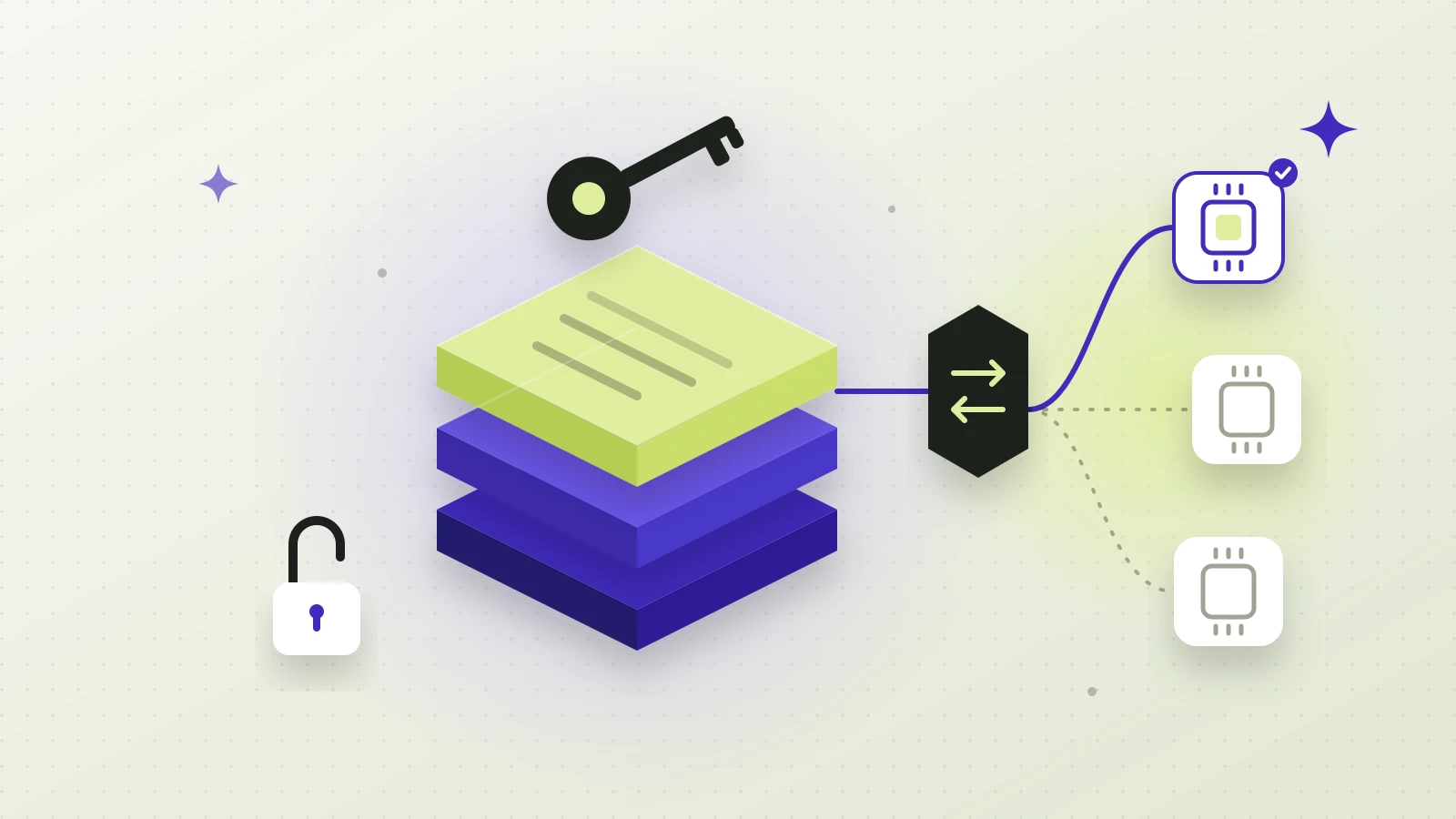
RAG has three advantages for a business. Your data stays in your systems instead of being baked into a model. Answers stay current, because the AI reads today’s records. And permissions can follow your existing access rules, so a support agent sees what a support agent should see.
The big platforms now offer versions of this. ChatGPT Business and Enterprise have Company Knowledge for connected apps. Microsoft Copilot is grounded in the email, chats and documents each user can already access. Google offers Gemini in Workspace. All three say they do not train their models on business customers’ data by default. The limit is that each one works best inside its own ecosystem, which is where vendor lock-in starts.
Don’t automate the chaos
Here is the mistake I see most often. Companies try automation, AI agents and bots on processes that are already broken. The result is that the broken process runs faster. The mistakes happen faster. The confusion and chaos that already exist in the human world get bigger and quicker.
AI does not fix messy data. It amplifies it. Before you connect anything, ask:
- Are there three versions of the same customer in three systems?
- Which source wins when they disagree?
- Who is allowed to see what?
- What do we actually want to do with the result?
That last question is the most important. Snow wanted fewer people to get sick. Your goal might be to reconnect with dormant customers, spot the ones likely to leave, or brief a salesperson in thirty seconds before a call. Start from the outcome, not from the data.
What the rules say in the EU, the US and Canada
This is not legal advice, but using old customer data in a new way is exactly where privacy law bites.
European Union
- GDPR purpose limitation (Article 5(1)(b)) says data collected for one purpose must not be used in a way that is incompatible with it. Article 6(4) lists what decides compatibility: the link between purposes, the customer relationship, the type of data, the consequences and safeguards such as pseudonymisation.
- Legitimate interests can be a lawful basis, but the European Data Protection Board’s December 2024 opinion on AI models says only where the processing is strictly necessary and the balancing test is respected.
- The EU Data Act has applied since 12 September 2025. From 12 January 2027, cloud providers can no longer charge you to switch or move your data out, which makes a private, portable setup easier.
- Still being negotiated: the EU “digital omnibus” proposals to change GDPR, including on AI training, are not law. EU governments agreed their position in October 2026; Parliament has not.
United States
- The FTC warned in February 2024 that quietly changing your terms to start using customer data for AI training may be unfair or deceptive. Tell customers plainly.
- The FTC has ordered companies to delete AI models built from improperly obtained data, starting with Everalbum in 2021. Clean data sourcing protects the system you build.
- California’s new CCPA regulations took effect on 1 January 2026, with rules on automated decision-making for significant decisions applying from 1 January 2027.
Canada
- PIPEDA and the privacy commissioners’ generative AI principles require that data be used only for purposes a reasonable person would consider appropriate.
- Quebec’s Law 25 allows personal information to be used only for the purposes it was collected for, unless the person consents or the new use is consistent with the original. It states that commercial prospecting is not a consistent purpose. It also requires a privacy impact assessment before building or overhauling an information system that involves personal information.
- Bill C-36, tabled in June 2026, would replace part of PIPEDA and add a legitimate-interest exception. It is not law yet.
Help you can use
- Canada: the Regional Artificial Intelligence Initiative, now about $700 million, funds AI adoption for small businesses through the regional development agencies. NRC IRAP supports SMEs developing AI.
- EU: European Digital Innovation Hubs act as first-stop AI advice centres for SMEs, and the EU’s AI Factories offer free support to SMEs and startups.
- US: Small Business Development Centers and SCORE run AI training, and the Manufacturing Extension Partnership helps small manufacturers.
How to turn scattered data into growth: Expand, Equip, Evolve
Expand: rethink what is possible
Many limits you are carrying are no longer real. Joining up five systems used to be a major IT project. It is not anymore. If you don’t expand your thinking first, you will spend money on outdated ideas.
- Pick one outcome. For example: get back in front of customers who have not bought in 12 months.
- Map where each piece lives. Sales, marketing, operations, support, leadership, and which people hold knowledge only in their heads.
- Check the purpose. Were you allowed to use this data for what you now want to do? If not, ask for consent or choose a different outcome.
Equip: choose the right tools for the job
- Clean before you connect. De-duplicate customers, decide which system wins, and fix the worst gaps.
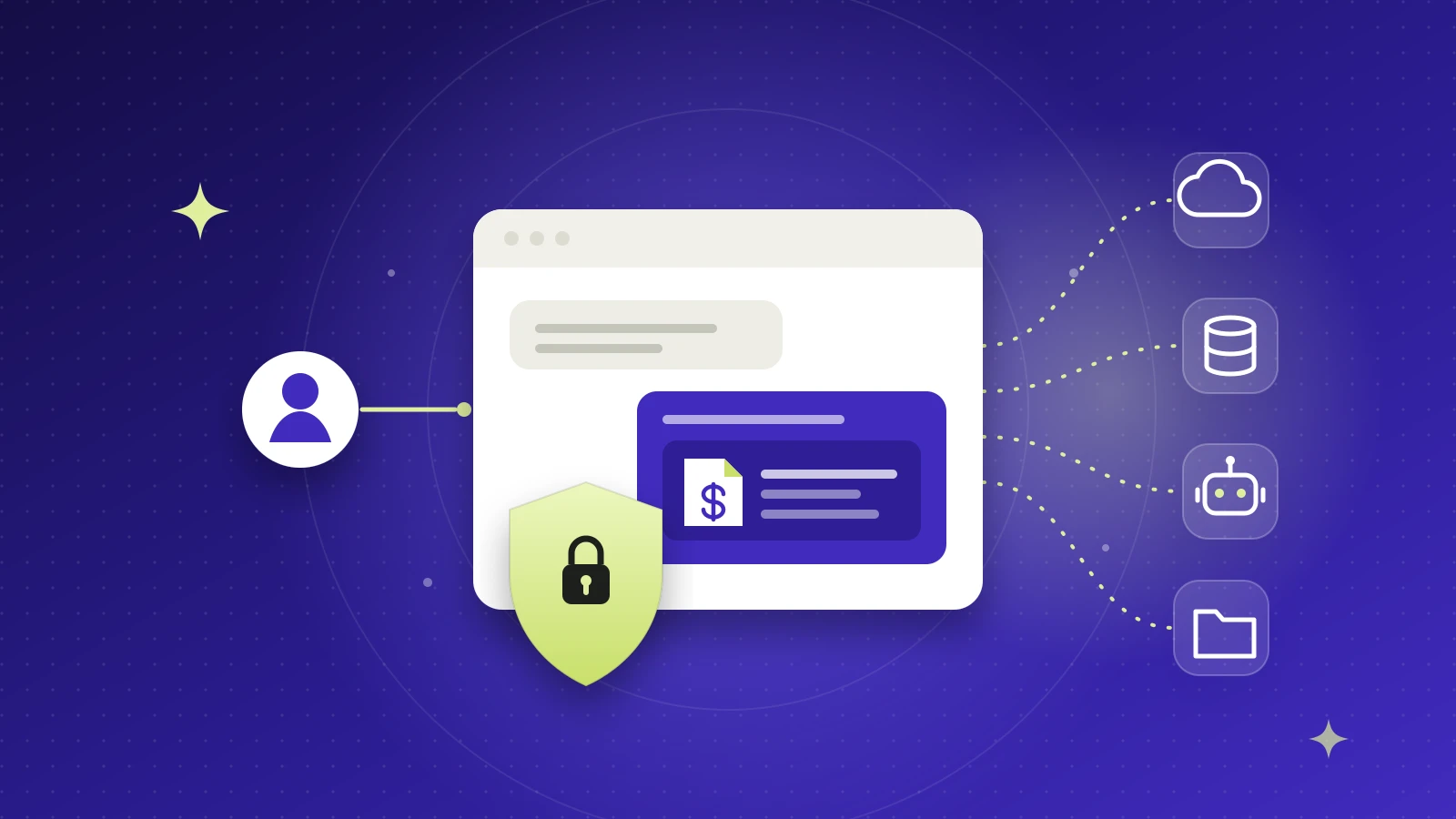
- Add a private intelligence layer on top of your existing systems. Don’t copy everything into another tool. Connect to your CRM, accounting, email and drives with the right permissions for you, your team and your company, so your trade secrets and judgment stay yours.
Evolve: get the outcome
- Let AI do the legwork, and keep people on the relationship. AI drafts the personal note, the call brief or the list of at-risk accounts. A person reviews and sends it.
- Measure one number. Reactivated customers, repeat orders or response rate, at 30 and 60 days.
Questions to ask this week
- How many customers have we not contacted in the last year?
- If a long-time customer called right now, could anyone see their full history in one place?
- Which system is the source of truth for customer details?
- What did customers agree to when we collected their data?
- Which process would we be embarrassed to automate as it is today?
Dr Snow did not need new data. He needed to bring scattered information together and see the pattern. Your business is probably in the same position. If you want a private AI that connects what you already have, with privacy and permissions built in, tell us your goal or see how we work. Before you connect anything, read whether it is safe to put company data into ChatGPT and what AI implementation really costs.
Sources
- UCLA Department of Epidemiology, John Snow and the Broad Street pump outbreak, including Snow’s 1855 account and the dot map; CDC, 150th anniversary of John Snow and the pump handle, September 2004; Michigan State University, Snow’s report to the Cholera Inquiry Committee
- Salesforce, State of Data and Analytics, November 2025; Gartner, Lack of AI-ready data puts AI projects at risk, February 2025; Bain & Company, Loyalty Rules!, chapter one, 2001
- OpenAI, Optimizing LLM accuracy, Company knowledge in ChatGPT and Business data privacy; Microsoft, Copilot privacy; Google, Generative AI in Workspace privacy hub, all read November 2026
- GDPR Article 5 and Article 6; EDPB, Opinion on AI models, December 2024; European Commission, Data Act explained; IAPP, EU member states finalize digital omnibus stance, October 2026
- FTC, Quietly changing your terms of service could be unfair or deceptive, February 2024, and Everalbum, 2021; California Privacy Protection Agency, CCPA regulations
- Office of the Privacy Commissioner of Canada, Principles for generative AI, December 2023; LégisQuébec, Act respecting the protection of personal information in the private sector; Parliament of Canada, Bill C-36
- Government of Canada, Regional Artificial Intelligence Initiative and NRC IRAP AI support; European Commission, European Digital Innovation Hubs; EuroHPC, AI Factories; NIST, Manufacturing Extension Partnership
Questions people ask
Can I train AI on my company data?
Yes, but most businesses should not train or fine-tune a model at all. To answer questions from your own knowledge, the better approach is retrieval-augmented generation (RAG): a private AI layer connects to your CRM, email and drives, finds the relevant records when asked, and respects existing permissions. OpenAI says many of its largest customer deployments used only prompt engineering and RAG. Fine-tuning is for style and format, not facts.
What is the difference between RAG and fine-tuning?
RAG gives the AI the right information at the moment you ask, pulled from your own systems, so answers stay current and you can control who sees what. Fine-tuning changes the model itself with examples, which is good for consistent tone, format or behaviour, but it is slower to update and harder to remove data from. Training a model from scratch is rarely sensible for a small or mid-sized business.
Is it legal to use my customer data with AI?
Usually, if you respect the purpose you collected it for. Under GDPR, new uses must be compatible with the original purpose or have another lawful basis, such as legitimate interests. Quebec's Law 25 says commercial prospecting is not a consistent purpose without consent. The FTC has warned against quietly changing terms to use customer data for AI training. Check before using old data for marketing.
Will my data be used to train ChatGPT or Copilot?
Not on business plans by default. OpenAI says it does not train on data from ChatGPT Business, Enterprise, Edu or its API by default. Microsoft says prompts, responses and data accessed through Microsoft Graph are not used to train foundation models. Google says Gemini in Workspace does not use your content to train models without permission. Consumer plans have different defaults.
How much of a company's data is actually usable for AI?
Less than most leaders think. In Salesforce's 2025 survey of more than 7,600 leaders, data and analytics leaders estimated 19% of company data is siloed or unusable and 26% is untrustworthy, and 84% said their data strategy needs an overhaul before AI can succeed. Gartner predicted that through 2026 organizations would abandon 60% of AI projects not supported by AI-ready data.
Where should a small business start with its customer data?
Start with one outcome, such as reconnecting with past customers. Map where customer information lives today, across sales, marketing, operations, support and people's heads. Check you are allowed to use it for that purpose, clean and de-duplicate it, then connect a private AI layer that reads from your systems with permissions. Keep a person reviewing anything sent to customers.