Many owners I talk to are growing. They have customers, capable people and ambition. They have started using AI, maybe even built a small app with it. And they have a nagging feeling they are only scratching the surface.
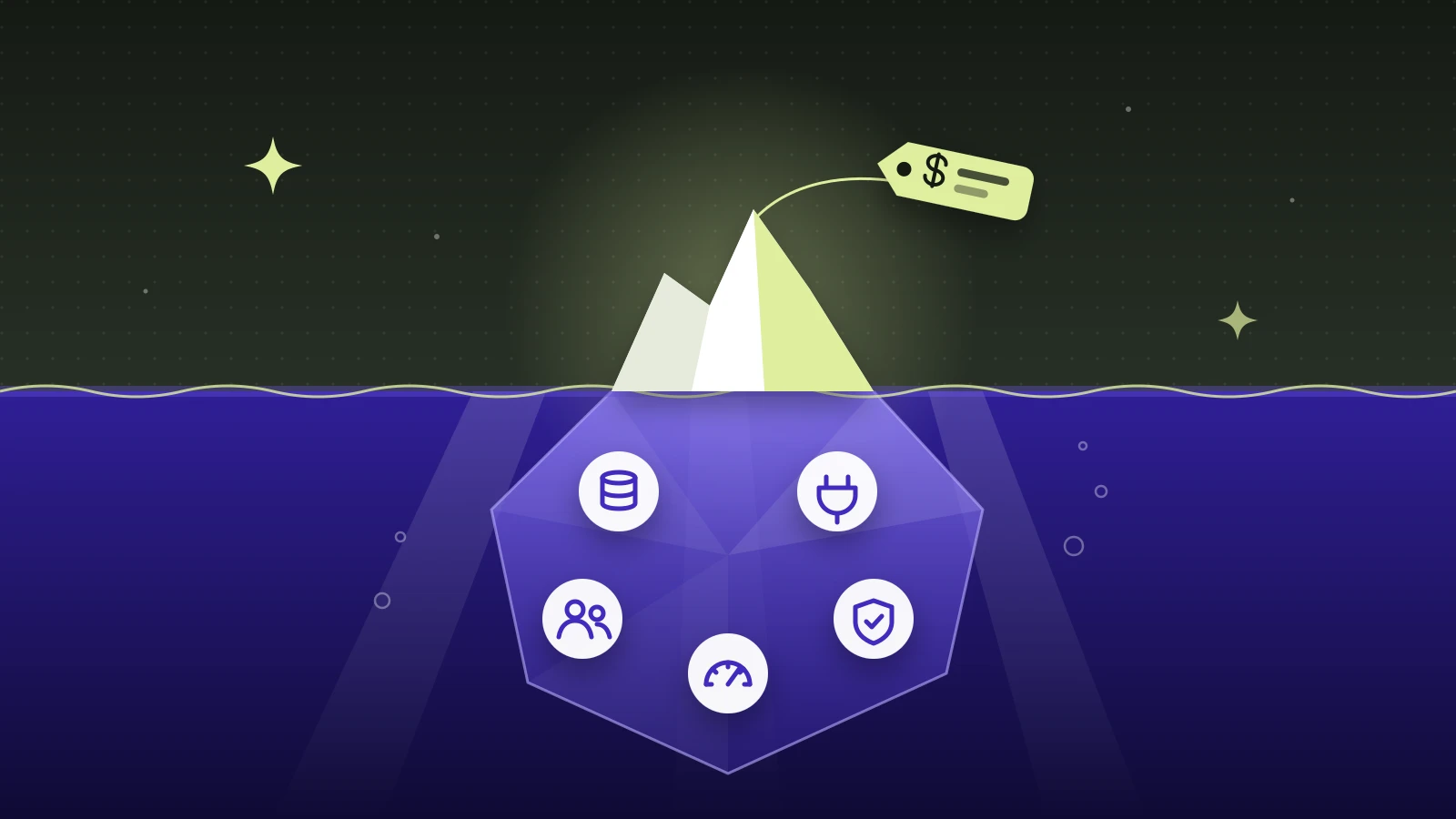
I compare it to scuba diving. You can buy the gear and stay a metre or two below the surface, looking at the pretty fish. But if you want the pearls, you have to go to 50 or 100 metres, and for that you need a guide. You first need to know the depth is there at all.
Are you planning around what you can personally manage?
Here is a question worth asking before your next growth decision. When you picture the next level of your business, what do you feel?
For many owners, alongside the excitement there is a faint second thought: next level means more load on me. More decisions, more coordination, more people calling. That quiet fear is the myth that stops a lot of people from taking the next step. They stay inside the boundary they have built, sized to their own personal capacity.
If the decisions, coordination, operations and sales in your business all land on you at the end of the day, your growth is capped at your personal capacity.
What Ray Kroc saw in one small restaurant
In 1954, Ray Kroc was a 52-year-old milkshake-machine salesman. One restaurant in San Bernardino, California, kept ordering more of his Multimixers, so he went to see it. It belonged to two brothers named McDonald.
What he found was unusual for the 1950s. The brothers had taken a very small menu and built a system around it: repeatable, scalable, able to run without them. Kroc saw the opportunity and negotiated the right to franchise it. He opened his first McDonald’s in Des Plaines, Illinois, in 1955. By 1960 there were about 200 restaurants. By 1965, about 700.
The brothers had spent years perfecting that system, but they ran one restaurant. Kroc multiplied it. And those 700 restaurants were not run by Ray Kroc or the McDonald brothers. They were run by people following a system, with a supply chain behind them. Their personal capacity was multiplied by systems.
The question doesn’t become anymore what you can do personally. The question becomes who are the collaborators who can help you get there.
Now, with AI, that multiplier is exponential. AI can hold part of your judgment, your way of thinking, your standards, and make it available to everyone on your team without you sitting in meetings all day.
Two bicycle mechanics who beat the experts
If you are thinking “I am not technical enough for this”, consider 1903.
Samuel Langley was one of the most respected scientists in America, Secretary of the Smithsonian Institution. The US War Department gave him $50,000, and the Smithsonian added another $20,000, to build a flying machine. On 7 October 1903, his Aerodrome launched from a houseboat and dropped straight into the Potomac River. Two days later, the New York Times wrote that a flying machine might be built “in from one million to ten million years.” On 8 December, Langley tried again. It crashed again.
Meanwhile, two bicycle mechanics from Dayton, Ohio, neither of whom had received a high-school diploma, had built their own wind tunnel and tested about 200 wing shapes. Their experiments from 1900 to 1903 cost them a little less than $1,000. On 17 December 1903, nine days after Langley’s second crash, Orville Wright flew 120 feet in 12 seconds.
The expert had the money, the title and the backing. The mechanics went deeper. They tested, measured and tested again.
That is the small-business advantage with AI. AI can now answer almost any question a degree program teaches. When knowledge is that cheap, what becomes valuable is your judgment and experience: knowing your customers, your trade and what good looks like. A degree proves you studied something. Experience proves you did it.
How many small businesses are using AI?
Adoption has jumped in two years, but most businesses are still near the surface.
- of US businesses used AI in a recent two-week period (US Census Bureau, Nov 2026)
- 24.2%
- of Canadian businesses used AI to produce goods or services (Statistics Canada, 2026)
- 19.2%
- of EU enterprises with 10+ staff used AI in 2025, and 17% of small ones (Eurostat)
- 20%
Private surveys show higher numbers. The US Chamber of Commerce found 66% of small businesses use AI in some way, and Intuit QuickBooks found 77% of US small businesses use it regularly. The difference is in the question. Many owners have tried a chatbot, but far fewer have built AI into how the business actually runs. Canada’s own national AI strategy puts SME adoption at only about 8%.
That gap is the opportunity. The tools are the same for everyone. The edge is not having AI. It is how deep you go with it.
Do the time math
Most people never put a number on their own time. Let’s do it.
- You work about 50 hours a week. That is 2,600 hours a year.
- Suppose you hand 20 of those hours to AI and systems. The work does not disappear; it is delegated.
- That is 1,040 hours a year, about 26 working weeks back in your life.
- At $100 an hour, that is $104,000 worth of your time, every year.
Even half of that, 500 hours, changes what a small business can do. Independent research is more conservative for casual use: the Federal Reserve Bank of St. Louis found generative AI users saved about 5.4% of their work hours, roughly 2.2 hours a week, and that savings have grown since. The difference between 2 hours and 20 is the difference between asking AI questions and redesigning work around it.
How to use AI in your small business: six steps
1. Write down what people come to you for
Every day, people approach you for certain things: approving a quote, answering a tricky customer, deciding on a discount, fixing a schedule. Write down the top three. These are your bottlenecks, and your best candidates.
2. Separate real limits from imagined ones
Write your biggest growth goal, then complete the sentence: “To accomplish that goal, we would have to…” Hire a new team, find a new supplier, raise our credit limit, launch a campaign. Then look at each answer and ask whether it is a real limitation, or a limitation only because you assume you have to do it yourself. If you can work out who, or what, can help, it stops being a limitation.
3. Pick one task and set one number
Choose the task that is frequent, text-heavy and easy to check. Record how it performs today: hours spent, response time, leads converted, errors. That is your baseline.
4. Run a 30 to 60 day experiment
Let AI do the task, not just assist with it. Ask: what does this look like if AI does it, rather than AI copying what a human does? Measure the same number at day 30 and day 60. Then decide with evidence. Our guide to what AI implementation costs covers how to scope this pilot.
5. Protect your data from day one
Use business AI accounts, not personal ones. Keep customer lists, pricing and financials out of public tools. Our guide to whether it is safe to put company data into ChatGPT explains the plans and the rules in the EU, US and Canada.
6. Capture your judgment, then multiply it
The McDonald brothers’ real asset was the system. Yours is how you decide: how you price, how you assess risk, how you talk to customers. Write it down, put it into a private AI that your team can ask, and your judgment starts working while you are not in the room.
Where AI helps first in a small business
| Area | Good first use | Keep a human on |
|---|---|---|
| Customers | Drafting replies, summarising long threads, FAQ answers | Anything sent to a customer |
| Sales | First drafts of quotes and proposals, follow-up emails, call notes | Pricing and discounts |
| Marketing | Blog and social drafts, ad variations, repurposing content | Brand voice and claims |
| Operations | Turning how-to knowledge into written procedures, scheduling, checklists | Safety-critical steps |
| Finance | Categorising expenses, summarising reports, cash-flow questions | Payments and filings |
| Team | Meeting summaries, onboarding guides, training material | Hiring decisions |
Growth happens outside the comfort zone
Limiting your growth to your comfort zone is like leaving money in a bank account during inflation. It feels safe, but it is losing value. Staying where you are while AI changes your industry is inflation of your value.
The internet forced us all to learn new habits: search engines, websites, then apps. AI is the same kind of transition, only faster. You can participate or stay on the sidelines, and if you participate, you choose how deep and how fast.
If you want a guide to go deeper, with privacy and security built in from the start, tell us your goal. We help owners expand what they think is possible, equip their teams with the right AI tools, and evolve how the business runs. You can also see how we work.
Sources
- McDonald’s, Our history; McDonald’s Australia, Maccas story; McDonald’s Canada, Our history
- Smithsonian National Air and Space Museum, Langley Aerodrome A; Smithsonian Institution Archives, Samuel P. Langley; New York Times, Flying Machines Which Do Not Fly, 9 October 1903
- National Park Service, The Wright brothers; Wright Brothers Aeroplane Company, Inventing the airplane
- US Census Bureau, Business Trends and Outlook Survey, November 2026; Statistics Canada, Canadian Survey on Business Conditions, May 2026; Eurostat, Use of AI in enterprises, December 2025
- US Chamber of Commerce, 2026 Empowering Small Business report; Intuit QuickBooks, 2026 AI Impact Report; Government of Canada, National AI Strategy
- Federal Reserve Bank of St. Louis, The impact of generative AI on work productivity, February 2025, and FRED blog update, August 2026
 Are You Planning Your Business Around What You Can Personally Manage?
 How 2 Bike Mechanics With No Degree Beat the Experts
Questions people ask
How can I use AI in my small business?
Start with the work, not the tool. List the three things people come to you for most often, pick the one that is frequent, text-heavy and easy to check, and test AI on it for 30 to 60 days against a single KPI such as hours spent, response time or leads converted. Common first uses are drafting customer replies and quotes, summarising meetings, marketing content, bookkeeping prep and turning your know-how into written processes.
What is the best way for a small business to start with AI?
Run one small, bounded experiment instead of a big rollout. Choose one task, record how it performs today, use AI on the real work for 30 to 60 days, and then decide with evidence whether to stop, adjust or scale. Use a business AI account rather than personal ones, and keep sensitive customer data out of public tools.
How much time can AI save a small business?
Research from the Federal Reserve Bank of St. Louis found generative AI users saved about 5.4% of their work hours, roughly 2.2 hours in a 40-hour week, and savings across the workforce have grown since. Businesses that redesign a whole task around AI, rather than just asking it questions, often save much more. If an owner working 50 hours a week hands 20 of them off, that is 1,040 hours a year.
How many small businesses use AI?
It depends on how you ask. The US Census Bureau's survey found 24.2% of US businesses used AI in a recent two-week period in late 2026, including 22.8% of firms with 1 to 4 employees. Statistics Canada reported 19.2% of Canadian businesses used AI to produce goods or services in the past year. Eurostat reported 20% of EU enterprises with 10 or more employees used AI in 2025, and 17% of small ones.
Do I need technical skills or a degree to use AI in my business?
No. AI can now explain almost anything a degree program teaches, so what matters more is your judgment and experience about your customers and your business. Many of the best AI uses in small businesses come from owners and staff who know the work deeply, not from technical specialists.
What should a small business not use AI for?
Avoid pasting customer personal data, pricing, contracts or financials into personal or free AI accounts, and keep a person approving anything that goes to a customer, spends money or changes records. Be careful with hiring and credit decisions, where privacy and anti-discrimination rules apply in the US, Canada and the EU.